



Migraine & Headache Specialist in Waldorf & Mechanicsville, MD Expert Migraine Care Close to Home.

St. Mary’s Neurology & Spine Center evaluates and treats migraines, tension headaches, cluster headaches and chronic daily headaches for patients across Charles, St. Mary’s and Calvert counties.

  • Evaluate

    A detailed headache history, neurological exam and MRI review when appropriate.

  • Treat

    Rescue and preventive medications, trigger guidance and follow-up care.

  • Prevent

    Botox® injections for chronic migraine, when appropriate.

  • We evaluate
  • Migraine
  • Chronic Migraine
  • Tension Headache
  • Cluster Headache
  • Post-Concussion Headache
  • Occipital Neuralgia

Headache care.Closer to home.

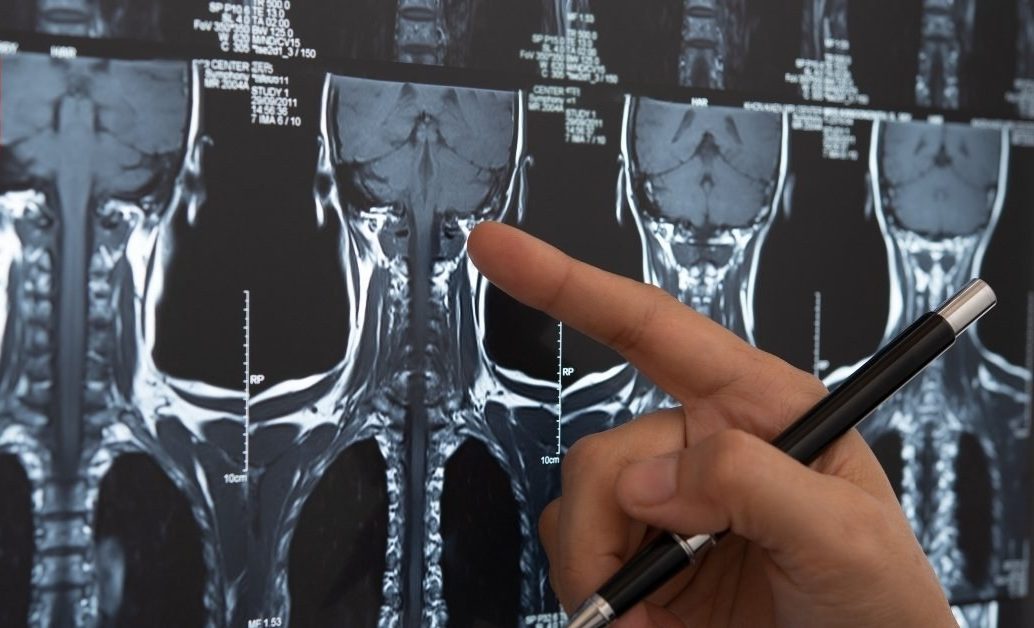
Hand pointing a pen at brain and neck MRI scans during a migraine and headache evaluation

See a migraine and headache specialist at our Waldorf or Mechanicsville office. Dizziness, numbness or memory changes too? Explore our neurology care.

Seek emergency care right away for a sudden, severe “worst headache of your life,” or a headache with weakness, vision loss, confusion, trouble speaking, or fever with a stiff neck. Call 911.

Proudly serving Waldorf, La Plata, Indian Head, Bryans Road, Mechanicsville, Leonardtown, Lexington Park, Prince Frederick and neighboring communities across Charles, St. Mary’s and Calvert counties. Individual results vary. Botox® is a registered trademark of its respective owner.

Migraines & Headaches Explained

What Are Migraines and Headaches? Types, symptoms and when to get care.

A headache is pain in the head, face or neck. A migraine is a neurological condition that causes recurring attacks of moderate to severe head pain, often with nausea and sensitivity to light and sound. At St. Mary’s Neurology & Spine Center, our team helps patients in Waldorf and Mechanicsville, MD find out which type they have and what to do about it.

What Is a Headache?

A headache is pain felt anywhere in the head, face or neck. Primary headaches, such as migraine, tension-type and cluster headache, are the condition itself. Secondary headaches are a symptom of something else, like a head injury, medication overuse or an irritated nerve. Most headaches are not dangerous, but frequent or unusual ones deserve a proper evaluation.
What Is a Migraine?

Migraine is a neurological disease, not just a bad headache. Attacks often bring throbbing pain, nausea, and sensitivity to light, sound or smells, and can last hours to days. Some people also have aura, temporary visual or sensory changes, before or during an attack.

Phases of a migraine attack
  1. Prodrome
  2. Aura
  3. Headache
  4. Postdrome

Common Types of Headache and Migraine

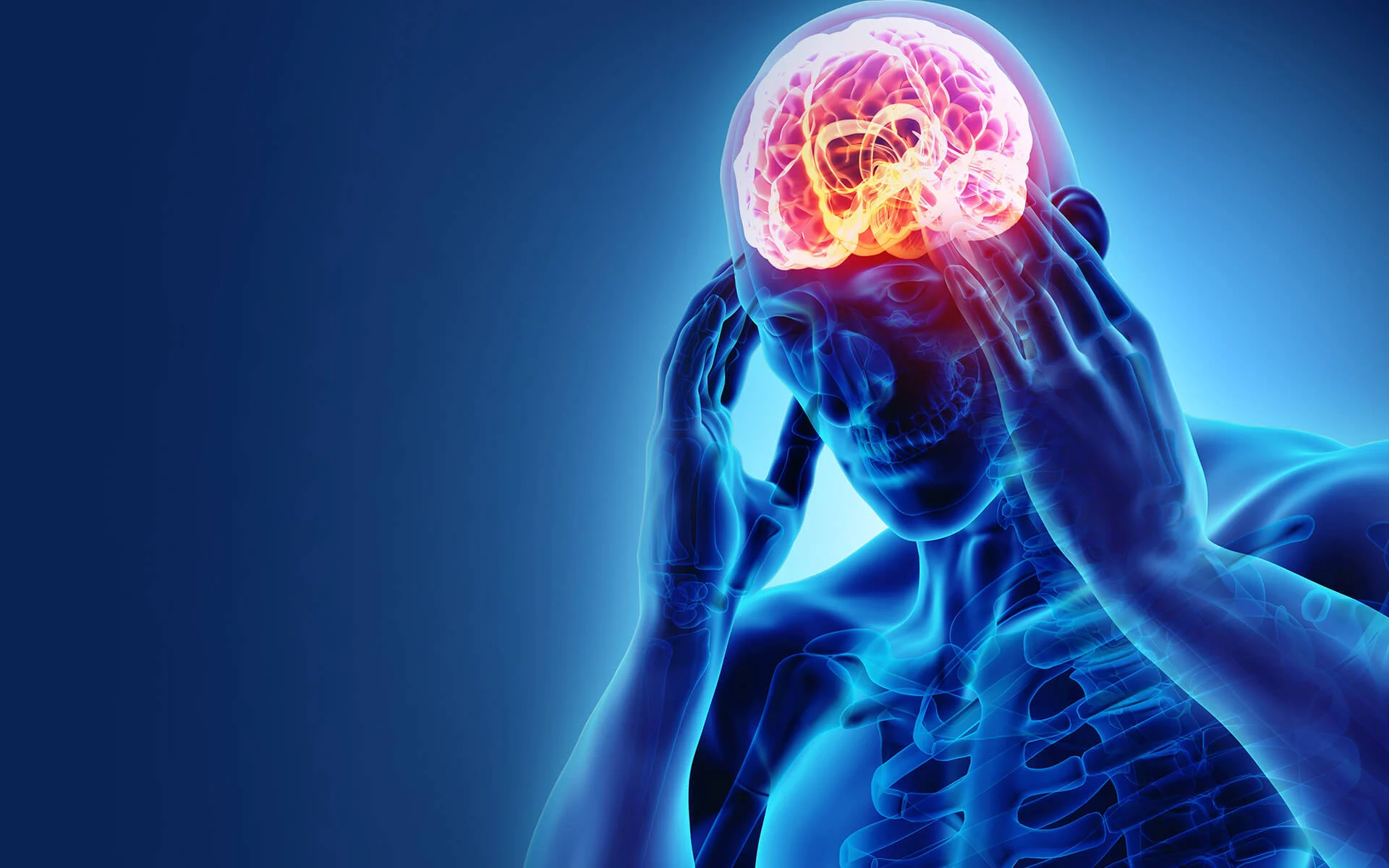
Illustration of a person holding their head in pain, with the brain glowing to show migraine and headache pain

Neurological disease · Migraine

Migraine

What it can feel like
  • Moderate to severe pain
  • Throbbing, often one-sided
  • Nausea or vomiting
  • Light and sound sensitivity

Migraine attacks can last hours to days and may be preceded by aura. Routine activity often makes them worse. A neurologist can confirm the diagnosis and build a plan to treat attacks and help prevent the next one.

Primary headache · Most common

Tension-Type Headache

What it can feel like
  • Dull, pressing ache
  • Band-like tightness
  • Both sides of the head
  • Neck and shoulder tension

Usually mild to moderate and not made worse by routine activity. Stress, poor sleep and muscle tension are common contributors. Frequent tension-type headaches deserve an evaluation, since they can overlap with migraine.

Primary headache · Trigeminal autonomic

Cluster Headache

What it can feel like
  • Severe pain around one eye
  • Watery or red eye
  • Stuffy or runny nose
  • Restlessness

Cluster headaches strike in cycles, often at the same time of day, with attacks lasting about 15 minutes to 3 hours. The pain is among the most intense of any headache, so prompt evaluation matters.

Migraine · 15+ headache days a month

Chronic Migraine

What it can feel like
  • Headaches most days
  • Migraine features on many days
  • Daily life disrupted
  • Frequent rescue medication use

When headaches occur on 15 or more days a month for over three months, with migraine features on at least 8 of them, it is called chronic migraine. Preventive options, including Botox® injections when appropriate, may help reduce how often attacks happen.

Secondary & nerve-related headaches

Other Headaches

Examples we evaluate
  • Medication-overuse headache
  • Post-concussion headache
  • Occipital neuralgia
  • Cervicogenic headache

Some headaches stem from another cause, such as overuse of pain medicine, a head injury, or an irritated nerve at the base of the skull or in the neck. Finding the source is what makes treatment work.

Common Migraine & Headache Triggers

Triggers differ from person to person. Keeping a headache diary can help you and your neurologist spot yours.

  • Stress
  • Irregular sleep
  • Skipped meals
  • Hormonal changes
  • Bright or flickering lights
  • Strong smells
  • Weather changes
  • Alcohol
  • Caffeine changes

When to See a Headache Specialist

  • Headaches that are frequent, getting worse or hard to control
  • Needing pain relievers often just to get through the week
  • Headaches that disrupt work, school, sleep or family life
  • A new headache pattern, or new headaches after age 50

Call 911 for a sudden, severe “worst headache of your life,” or a headache with weakness, numbness, trouble speaking, vision loss, confusion, seizure, or fever with a stiff neck.

Living with frequent headaches? Let’s find out why.

Tell us what you’re feeling and our team in Waldorf or Mechanicsville will guide you to the right care. Dizziness, numbness or memory changes too? Explore our neurology care.

Migraine and headache care for patients in Waldorf, La Plata, Indian Head, Bryans Road, Mechanicsville, Leonardtown, Lexington Park, Prince Frederick and communities across Charles, St. Mary’s and Calvert counties, Maryland. This information is educational and is not a substitute for medical advice. Individual results vary. Botox® is a registered trademark of its respective owner.

How We Evaluate

Headache & Migraine Evaluation in Waldorf & Mechanicsville, MD Find the cause first, then build the plan.

Headaches have many causes, and the right treatment depends on finding the right one. At St. Mary’s Neurology & Spine Center, a headache evaluation combines a detailed history, a neurological exam, a look at the neck and spine, and imaging or testing only when it is appropriate.

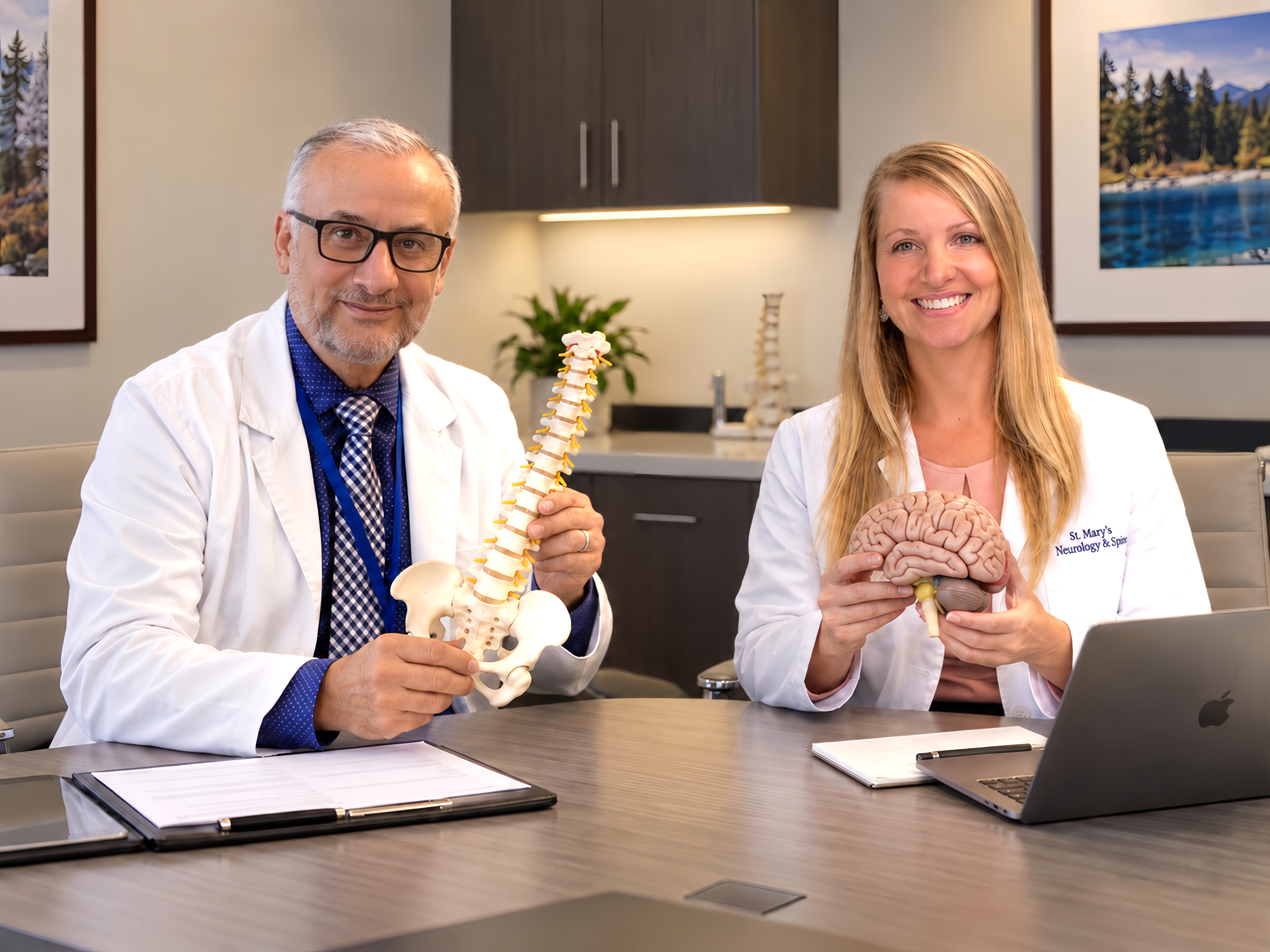
Two St. Mary's Neurology & Spine Center providers in white coats holding a spine model and a brain model, ready to evaluate headaches and migraines
  1. Your Headache History

    We start by listening. Where the pain is, how often it comes, how long it lasts, what triggers it and what helps all point toward the type of headache. A headache diary is a big help if you have one.

    • Location
    • Frequency
    • Triggers
    • Medications tried
    • Family history
  2. Neurological Exam

    A hands-on exam checks how your brain and nerves are working and looks for anything that suggests a cause beyond a primary headache disorder like migraine.

    • Strength
    • Reflexes
    • Sensation
    • Vision
    • Balance & coordination
  3. Neck & Spine Review

    Neck problems can trigger or mimic headaches, as in cervicogenic headache and occipital neuralgia. As a neurology and spine practice, we look at the neck too.

    • Neck motion
    • Muscle tension
    • Occipital nerves
  4. Imaging & Testing, When Appropriate

    Many people with typical migraine and a normal exam do not need imaging. We may recommend an MRI or other tests when there are red flags, such as a sudden severe headache, new neurological symptoms, a changing pattern or a new headache after age 50.

    • Brain MRI
    • Lab work
    • Other tests as needed
  5. Diagnosis & Personalized Plan

    We name your headache type and explain it in plain language, then build a plan that may include rescue and preventive medications, trigger and lifestyle guidance, and Botox® for chronic migraine when appropriate. Follow-up visits show what is working.

Headache and migraine evaluation for patients in Waldorf, La Plata, Indian Head, Bryans Road, Mechanicsville, Leonardtown, Lexington Park, Prince Frederick and communities across Charles, St. Mary’s and Calvert counties, Maryland. This information is educational and is not a substitute for medical advice. Individual results vary. Botox® is a registered trademark of its respective owner.

Prevent & Manage

How a Neurologist Helps Prevent & Manage Headaches and Migraines in Waldorf & Mechanicsville, MD Care that goes beyond pain relief.

Treating one attack at a time is only half the job. A headache neurologist builds a plan to stop attacks before they start, relieve the ones that break through and track what is working. At St. Mary’s Neurology & Spine Center, that plan can include preventive medication, lifestyle guidance and Botox® for chronic migraine.

  • Acute Relief

    Fast treatment for an attack that has already started, matched to how your migraines behave. Taking it early often works best.

    • Triptans
    • CGRP gepants
    • Anti-nausea
  • Preventive Medication

    Daily, monthly or quarterly treatments that lower how often attacks happen and how severe they are, including CGRP-targeting therapies.

    • CGRP therapies
    • Daily preventives
  • Botox® for Chronic Migraine

    An FDA-approved preventive for adults with chronic migraine, given as a series of small injections about every 12 weeks.

    • FDA-approved
    • Every 12 weeks
  • Triggers & Lifestyle

    Sleep, hydration, meals, caffeine, stress and hormones. We help you spot patterns and avoid medication-overuse headache.

    • Sleep
    • Diet
    • Stress
Provider in purple gloves giving a Botox injection near the forehead of a relaxed patient for migraine prevention

FDA-approved to prevent chronic migraineAdults with 15+ headache days a month

Botox® for Migraine

Fewer headache days, not just faster relief.

Botox® (onabotulinumtoxinA) is FDA-approved to prevent headaches in adults with chronic migraine, meaning 15 or more headache days a month, each lasting 4 hours or longer. It is thought to work by blocking the release of chemicals involved in pain signaling, which helps quiet the nerve pathways that set off migraine attacks.

It is a preventive, not a rescue treatment, and it is not approved for episodic migraine or tension-type headache. Results build over time, and many patients need two to three treatment cycles to see the full benefit.

Paying out of pocket? Ask about our self-pay savings
  • 31small injections per treatment
  • 7head and neck muscle areas
  • 12wksbetween treatments
  • 15+headache days a month in chronic migraine

How We Administer Botox® for Migraine

  1. Candidate Review

    We confirm your diagnosis, count your headache days, review past preventives and your history, and talk through benefits and risks.

  2. Mapped Injections

    Using the standard PREEMPT protocol, we place small amounts with a very fine needle across 31 sites: forehead, temples, back of the head, neck and upper shoulders.

  3. In and Out

    Treatment usually takes about 15 to 30 minutes, and most people go straight back to their day. Mild soreness at the sites can happen.

  4. Repeat & Track

    Treatments repeat about every 12 weeks. We track your headache days to see how well it is working and adjust your plan.

A smoother bonus

Botox® placed in the forehead and frown muscles can also soften lines in those areas, so many patients notice smoother skin along with fewer headache days. Cosmetic Botox is a separate treatment with its own goals and dosing. Ask us if you are interested.

Important safety information: Botox® can cause serious side effects, including problems swallowing or breathing and spread of the toxin’s effects beyond the injection area. Common side effects include neck pain, headache, eyelid drooping and pain at the injection site. Tell us about all of your medical conditions and medications. Ask us for the full Prescribing Information and Medication Guide.

Migraine and headache prevention for patients in Waldorf, La Plata, Indian Head, Bryans Road, Mechanicsville, Leonardtown, Lexington Park, Prince Frederick and communities across Charles, St. Mary’s and Calvert counties, Maryland. Learn more about our neurology care. This information is educational and is not a substitute for medical advice. Individual results vary. Botox® is a registered trademark of its respective owner.

Our Locations

Migraine & Headache Neurologist in Waldorf & Mechanicsville, MD Two offices, one team.

Serving La Plata, Indian Head, Bryans Road, Leonardtown, Lexington Park, Prince Frederick and all of Charles, St. Mary’s and Calvert counties. See all locations.

Migraine & Headache FAQs

Headache & Migraine Questions, Answered by a Neurologist in Waldorf & Mechanicsville, MD Quick, clear answers.

When should I see a neurologist for headaches or migraines?

See a neurologist if headaches are frequent, getting worse, keeping you from work or family, or not responding to over-the-counter medicine, or if you use pain relievers more than a couple of days a week. Call 911 or go to the nearest emergency room for a sudden, severe "worst headache of your life," or a headache with weakness, vision loss, confusion, trouble speaking, fever with a stiff neck, or after a head injury.

What is the difference between a headache and a migraine?

A headache is pain in the head or neck. A migraine is a neurological condition that often brings throbbing pain on one side, along with nausea, sensitivity to light and sound, or visual changes called aura. Migraines can last hours to days, and a neurologist can tell them apart from tension-type and other headaches so you get the right treatment.

What happens at my first headache visit?

We listen first. Your neurologist reviews your headache history, symptoms, triggers, medications and family history, performs a neurological exam and, when needed, orders imaging or other testing. You leave with a clear diagnosis and a plan. Bring a list of your medicines and any notes on when your headaches happen.

How does a neurologist help prevent and manage migraines?

Care usually combines acute treatment for attacks that have already started, preventive medication such as CGRP-targeting therapies, trigger and lifestyle guidance (sleep, hydration, meals, caffeine, stress) and, for eligible adults with chronic migraine, Botox. We track your headache days so the plan keeps improving.

Is Botox FDA-approved for migraines, and who qualifies?

Yes. Botox (onabotulinumtoxinA) is FDA-approved to prevent headaches in adults with chronic migraine, meaning 15 or more headache days a month, each lasting 4 hours or longer. It is a preventive, not a rescue treatment, and it is not approved for episodic migraine or tension-type headache. Your neurologist will confirm whether you are a candidate.

How is Botox for migraine given, and how often?

Using the standard PREEMPT protocol, small amounts are placed with a very fine needle across 31 sites in 7 head and neck muscle areas. A visit usually takes about 15 to 30 minutes, and treatments repeat about every 12 weeks. Many patients need two to three treatment cycles to see the full benefit. Common side effects include neck pain, headache and eyelid drooping.

What if I pay out of pocket or insurance doesn't cover Botox?

Call us. If you are paying out of pocket or your insurance does not cover Botox for migraine prevention, we will work with you to get the best price possible and focus your treatment where you need it most, so you get the best outcome without paying for more than you need.

Where do you treat migraines, and how do I book?

We see headache and migraine patients at our Waldorf office (11340 Pembrooke Square, Suite 211) and our Mechanicsville office (28105 Three Notch Road, Suite 1C), serving Charles, St. Mary's and Calvert counties. Call 301-290-1510 or send a request through our contact page.

Still have a question?Our team is happy to help you get started.

This information is educational and is not a substitute for medical advice. If you think you are having a medical emergency, call 911. Learn more about our neurology care. Botox® is a registered trademark of its respective owner.